
How Does Google Ads Work?
Google Ads is one of the most powerful online advertising platforms available to businesses today. It allows companies to place advertisements directly in front of people who are actively searching for products or services on Google. When someone types a search query, Google displays relevant ads above or alongside the organic search results. Advertisers bid on keywords related to their services, and they only pay when someone clicks on their ad.
This pay per click model makes Google Ads an effective and measurable lead generation platform. Businesses can target specific locations, audiences and search intent, making it easier to reach potential customers who are already interested in what they offer. When campaigns are structured and managed correctly, Google Ads can consistently deliver leads, phone calls and enquiries.
However, many businesses struggle with poor performance and often ask the same question: Why is my Google Ads not working?
Why Is My Google Ads Not Working?
After many years of auditing, setting up and scaling Google Ads accounts, we have gained a lot of experience in understanding why campaigns fail. In many cases the issue is not Google Ads itself, but rather the way the campaigns are structured, configured or optimised.
Below are some of the most common reasons why a Google Ads account may not be performing as expected.
Reason 1: Campaign Bidding Strategy
When creating a new Google Ads campaign, Google often encourages advertisers to use a Maximise Conversions bidding strategy. While this strategy can be extremely powerful, it is not ideal for brand new campaigns.
A Maximise Conversions strategy relies heavily on historical conversion data. Google uses past data to understand which searches, users and devices are more likely to convert. If your account has no conversion history, the system has no reliable information to optimise bids.
For new campaigns, it is usually better to start with a Maximise Clicks or manual bidding strategy. This allows the campaign to gather valuable data before switching to a conversion focused bidding model.
Reason 2: Wrong Campaign Type
Selecting the correct campaign type is critical when creating a new campaign. Google provides several campaign options such as Search, Display, Performance Max, Video and more.
If your main goal is to generate leads, a Search campaign is usually the most effective starting point because it targets people who are actively searching for your services.
Many experienced advertisers prefer creating campaigns without Google’s automated campaign guidance. This allows full control over targeting, settings and optimisation. Choosing the wrong campaign objective from the beginning can lead to poor targeting and weak results.
Reason 3: Conversion Tracking
Conversion tracking is one of the most important parts of any Google Ads account. Without it, you have no clear way of measuring the success of your campaigns.
Conversions show how many leads, enquiries or phone calls your ads generate. They also help Google understand which users are more likely to convert. This information is used by the platform to optimise ad delivery and improve campaign performance.
Conversion tracking becomes even more important when switching from a Maximise Clicks strategy to a Maximise Conversions strategy, as Google relies on this data to adjust bidding and targeting.
Reason 4: Target Keywords
Choosing the correct keywords is essential for reaching the right audience. If your keywords are too broad or unrelated to your services, your ads may attract clicks from users who are not interested in what you offer.
One of the best tools for keyword research is the Google Ads Keyword Planner. This tool provides valuable insights such as search volume, competition levels and estimated cost per click.
By analysing this data, you can select keywords that are both relevant and likely to generate traffic from users who are ready to take action.
Reason 5: Ad Groups
Ad groups help organise your campaign and make it easier for Google to understand your services.
Each ad group should focus on a single service or product category. For example, if you offer swimming pool repairs and pool installations, these services should be placed in separate ad groups.
When multiple unrelated services are grouped together, it becomes difficult for Google to determine which search queries are most relevant. This confusion can reduce ad relevance and negatively affect campaign performance.
Reason 6: Budget
Your daily budget plays a significant role in the success of your Google Ads campaigns. If your budget is too low, your ads may not receive enough clicks to generate meaningful data or conversions.
A simple way to estimate a reasonable daily budget is by looking at the average cost per click for your target keywords. For example, if the average cost per click is R5, and you want your campaign to generate at least 20 to 30 clicks per day, you would need a daily budget of approximately R100 to R150.
This budget allows Google to compete effectively in auctions and gather enough data to optimise performance.
Reason 7: Landing Page Relevance
Your landing page must match the service that is being advertised. When users click on an ad, they expect to land on a page that directly relates to their search.
For example, if someone clicks on an advertisement for swimming pool repairs, they should land on a page specifically about that service. If they are redirected to a page about air conditioning installations instead, the experience becomes confusing and irrelevant.
This mismatch can reduce conversions and increase your advertising costs.
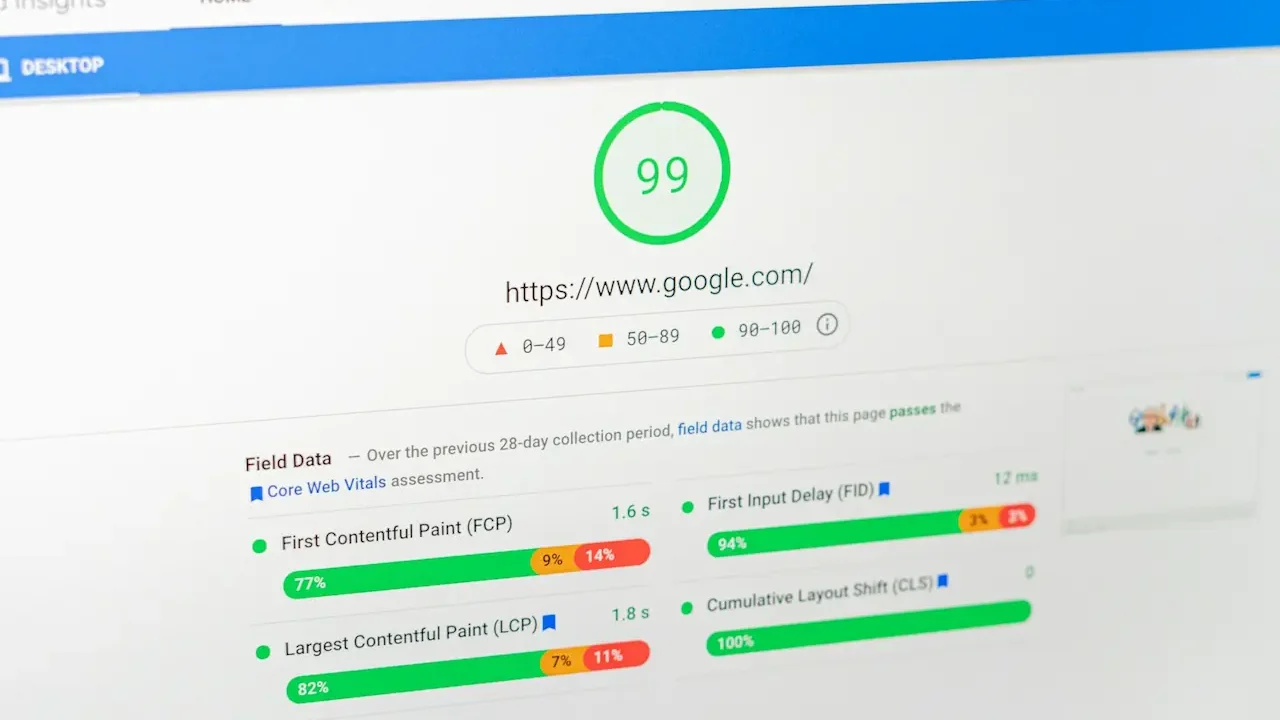
Reason 8: Website Speed and User Experience
Even if your ads are performing well, a slow or poorly designed website can prevent visitors from converting.
A landing page should load quickly, be easy to navigate and clearly explain the service being offered. It should also include strong calls to action such as contact forms, phone numbers or quote request buttons.
If visitors struggle to use your website or wait too long for pages to load, they will often leave before making an enquiry. It is important to focus on a conversion-optimised website design for the best result.
Reason 9: Patience
Many business owners expect instant results from their advertising campaigns. However, Google Ads requires time to collect data and optimise performance.
In the early stages, the system is learning which keywords, audiences and searches deliver the best results. During this period it is important not to make constant changes to the campaign.
Allowing a campaign to run for several weeks gives Google enough information to improve targeting and bidding strategies.
Reason 10: Negative Keywords
Negative keywords are an important tool for preventing wasted advertising spend. They allow you to exclude search terms that are not relevant to your business.
For example, a company offering swimming pool repairs should consider adding negative keywords such as jobs, salary, training, course or PDF. Without these exclusions, ads might appear for searches like how to repair a swimming pool PDF download, which are unlikely to generate paying customers.
Adding negative keywords helps ensure your ads only appear for searches that have real commercial intent.
Conclusion
If your Google Ads Not Working as expected, the issue is often related to campaign structure, targeting or optimisation rather than the platform itself. Factors such as bidding strategies, keyword selection, conversion tracking and landing page quality all play a crucial role in determining the success of your campaigns.
By identifying and correcting these common issues, businesses can significantly improve their advertising performance and generate more qualified leads.
If you are struggling with underperforming campaigns, Webluno has the experience and expertise needed to build, optimise and scale successful Google Ads strategies that deliver measurable results for your business, you can view our Google Ads packages here.